
The Burden of Teaching God’s Word: A Responsibility I Do Not Take Lightly
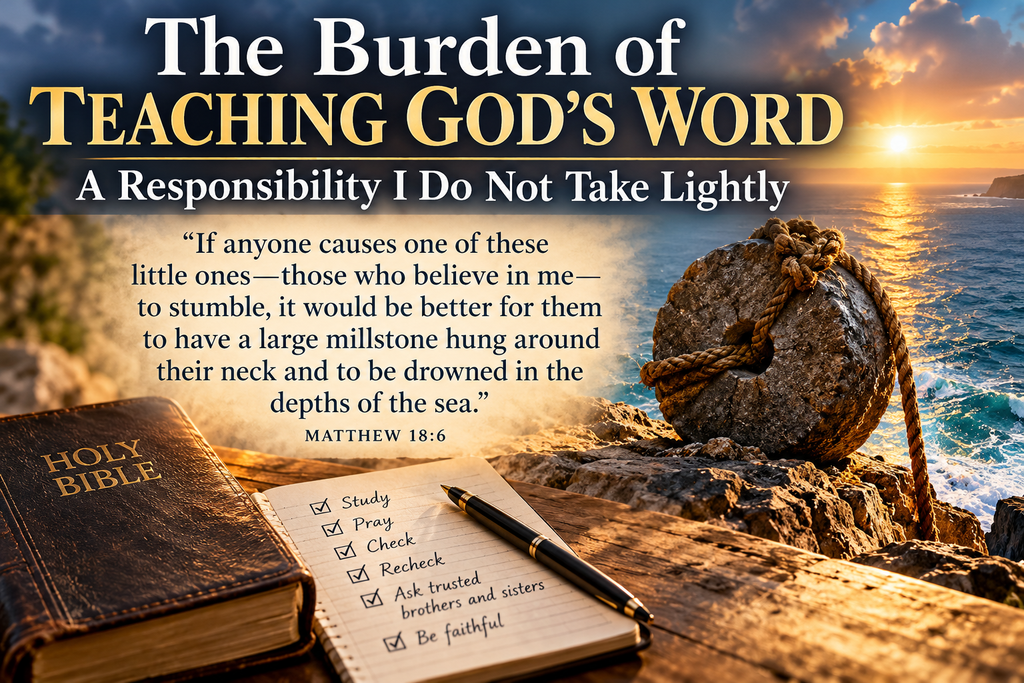
There is one passage of Scripture that weighs heavily on my heart whenever I sit down to write a book intended to teach others about God. It is a warning from Jesus that I believe every pastor, preacher, Bible teacher, and Christian author should take seriously.
Matthew 18:6 (NIV)
“If anyone causes one of these little ones—those who believe in me—to stumble, it would be better for them to have a large millstone hung around their neck and to be drowned in the depths of the sea.”
These are sobering words. Jesus did not speak them casually, and I do not believe we should read them casually.
When I consider this passage, I am reminded that teaching about God is not simply a matter of expressing an opinion, sharing an interpretation, or persuading people to agree with us. It carries a responsibility. When we teach others about God, we are influencing how they understand His character, His commandments, His promises, and His plan for salvation.
That responsibility should never be taken lightly.
The Responsibility of Those Who Teach
I believe those who teach and preach God’s Word carry a special burden. People often place their trust in religious leaders because they believe those leaders have studied Scripture and understand its message. They listen to sermons, attend Bible studies, read Christian books, and trust that the people teaching them are faithfully presenting God’s truth.
But what happens when a teacher gets it wrong?
We are human, and none of us possesses perfect understanding. Honest mistakes can happen, and sincere Christians can disagree about the meaning of certain passages. The issue is not whether a teacher has every answer correct. The issue is whether that person approaches God’s Word with humility, honesty, diligence, and a willingness to be corrected.
There is a difference between making an honest mistake and deliberately twisting Scripture to support a personal agenda.
James 3:1 offers another sobering warning:
“Not many of you should become teachers, my fellow believers, because you know that we who teach will be judged more strictly.”
Why would Scripture give such a warning? Because teaching carries influence, and influence carries responsibility. A teacher’s words can help someone grow closer to Christ, or they can create confusion, distort the gospel, and lead people away from the truth.
I believe we must take seriously the possibility that we will answer to God for how we have handled His Word and how we have influenced those who trusted our teaching.
Jesus Did Not Remain Silent
When Jesus confronted the religious leaders of His day, He did not always speak gently. He showed compassion to those who were struggling, searching, or burdened by sin. Yet He spoke forcefully when confronting religious hypocrisy and teaching that placed obstacles between people and God.
In Matthew 23:13, Jesus declared:
“Woe to you, teachers of the law and Pharisees, you hypocrites! You shut the door of the kingdom of heaven in people’s faces. You yourselves do not enter, nor will you let those enter who are trying to.”
Think about the seriousness of that accusation. These were men who were regarded as religious authorities. They knew the Scriptures and taught others how to live according to the law. Yet Jesus condemned the ways in which their conduct and teaching obstructed people’s relationship with God.
Their position did not protect them from correction. In fact, their influence made their failures more consequential.
This is why I sometimes speak more forcefully when addressing religious leaders than when speaking with someone who is honestly searching for Christ. A person asking questions deserves patience, compassion, and an opportunity to discover the truth. A person who claims the authority to teach God’s Word must also be willing to accept the responsibility that comes with that authority.
When I see religious leaders changing the meaning of Scripture to make it more acceptable to contemporary culture, I believe their teaching deserves to be challenged. God’s Word should inform our understanding of the world, not be reshaped simply to conform to the world’s expectations.
That does not mean every disagreement is evidence of deception. We must be careful not to confuse our own interpretations with unquestionable truth. But neither should we remain silent when we believe Scripture is being misrepresented.
We must challenge teachings with Scripture, sound reasoning, humility, and a sincere desire to bring people closer to Christ—not with personal attacks or a desire to win an argument.
Speaking the Truth While Showing Love
There is something else I must continually remind myself of: Jesus called His followers to love one another.
In John 13:35, He said:
“By this everyone will know that you are my disciples, if you love one another.”
Truth and love are not enemies. We should never use love as an excuse to ignore false teaching, nor should we use truth as an excuse to treat people cruelly.
The way we challenge someone matters. Our goal should not be to humiliate a pastor, condemn a fellow Christian, or demonstrate that we know more than someone else. Our goal should be to defend the truth of God’s Word and help people understand what Scripture teaches.
I must also remember that I, too, am accountable. Before I criticize another person’s interpretation, I must examine my own. Before I accuse someone of misrepresenting Scripture, I must make certain that I have studied the passage carefully and considered its context.
It is possible to be passionate about truth and still be wrong about a particular interpretation. Humility requires us to acknowledge that possibility.
Why I Check and Recheck What I Write
This brings me back to the reason that Matthew 18:6 weighs so heavily on my heart.
When I write nonfiction books intended to teach about God, I do not want to rush through the process. I check my work, recheck it, and ask trusted brothers and sisters in Christ to review it. I want them to identify errors, challenge my reasoning, and point out places where I may have misunderstood a passage.
I do not do this because I believe I am incapable of making a mistake. I do it because I know I am capable of making one.
When I write about Scripture, I am not merely sharing my thoughts on a subject. I am handling words that people believe reveal God’s truth. That demands careful study, prayer, and a willingness to correct my work when necessary.
My greatest concern is not that someone will disagree with my writing or criticize one of my books. Disagreement is part of studying Scripture together. My concern is that I might unintentionally teach something that leads a reader away from the truth about God or the salvation offered through Jesus Christ.
I never want to become an obstacle between someone and Christ.
A Warning Every Christian Teacher Should Consider
Whether you are a pastor standing before a congregation, a Sunday school teacher leading a class, a parent teaching your children, or an author writing a Christian book, your words matter.
Ask yourself: Am I faithfully presenting what Scripture teaches? Am I explaining the context, or am I selecting verses to support what I already believe? Am I willing to be corrected? Am I helping people understand God’s Word, or am I asking them simply to accept my interpretation?
These are questions I must ask myself before expecting others to answer them.
None of us should approach God’s Word with arrogance. We should approach it with reverence, recognizing both the privilege of sharing its message and the responsibility that accompanies that privilege.
I want my writing to help people discover Christ, understand Scripture, and grow in their faith. I want readers to examine what I write against the Bible rather than accepting my words simply because my name appears on the cover.
And above all, I want to stand before God knowing that I made every reasonable effort to handle His Word faithfully.
The greatest responsibility of a Christian teacher is not to be admired for what he teaches, but to be faithful to the One he claims to represent.
That is the responsibility I carry whenever I write. It is a responsibility I pray I will never take lightly.
May God grant all of us who teach, preach, write, and share His Word the wisdom to understand it, the humility to be corrected, and the courage to speak the truth in love.